Recently, something one of my clients said caught my attention.
She was experiencing a lot of procrastination while working on her thesis, something really important to her. As we talked, we realized that in the past, she had actually enjoyed working on it. She had support from her teacher and her lab.
This time, she felt she had to do it all by herself.
I stayed silent.
And in that silence, she told me it felt like she had been living by a fixed, long-term belief: you have to suffer.
In Chinese, the word for suffering is "chi ku" (吃苦), which literally means "eating bitterness."
When I was growing up, I heard the same from our culture: only those who can eat the most bitterness can become the top people (吃得苦中苦,方为人上人).
We learn, early, that endurance is the only worthy path to success.
Even for my client, who doesn't remember much Chinese, this belief from the culture still persists.
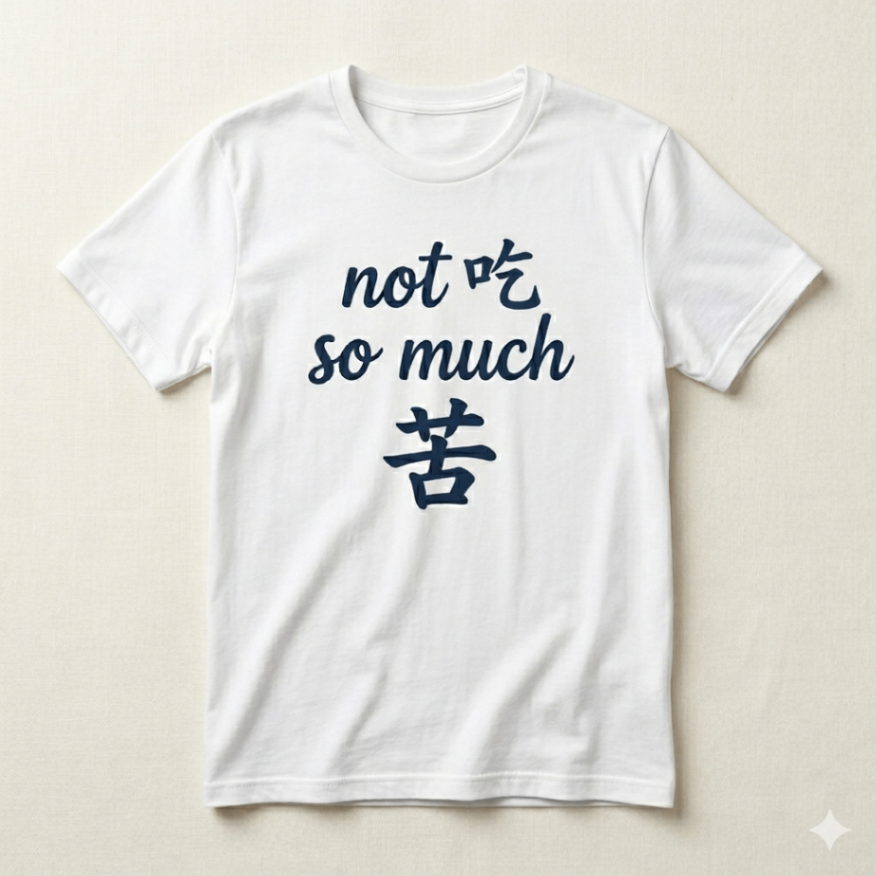
Then, in the session, she had a funny realization: "not chewing so much ku." Not eating so much bitterness.
By letting go of that requirement, she found her own authentic way to take action toward the things she really cares about.
I even told her I was going to put that phrase on a t-shirt.
I've come to see this more and more. In Chinese culture, we often carry guilt and shame around a perceived lack of suffering. We feel guilty for asking for support. We neglect our own needs just to maintain the appearance of "always suffering," always doing it alone, without seeking help.
And in turn, this makes us suffer far more when we're trying to do something that truly matters to us.
ps, if you recognize this, the quiet guilt of needing help, or the feeling that hard things must be done alone, I'd love to talk. This is something I see often in women with Chinese cultural backgrounds. I'm a Life and Career Coach, and if we seem like a good match, the first conversation is free. More at mengchen.co.